


The village of Curbar in the peak park nestles between the river Derwent and the escarpment which forms the ‘bar’ to the east.
On Ascension day 2026 I was pleased to join with over thirty others for a benefice service at the village church, All Saints.
I had another reason for my visit. The May sunshine shone brightly, making for a beautiful day (albeit with a cool wind!). The sun was making the grass in the churchyard grow, and the trees wore a vivid coat of new leaves.
And, thanks to the solar panels on the roof of the church, the sun was also boiling the kettle for tea inside the building!
Back in 2020, the church installed 12 Panasonic solar panels and an inverter, to turn the DC generated into the AC which we use in our homes.
Like many churches, All Saints possesses a large south facing roof, ideal for catching daylight. The panels were installed on top of the slates to the east end of the building. This location makes them unobtrusive and they blend in well. This was important as the church lies in both the peak park and the village conservation area.
On learning of the reason for my visit, one member of the congregation asked ‘Ah, but what would Betjeman say?!’
Sir John Betjeman, poet laureate and keen ecclesiologist, was famously no fan of the intrusions of modern technology.
I replied that both SPAB and the Victorian society had not objected to the installation, and since Betjeman was a very active member of both organisations, that ought to count for something.
On further reflection, whilst Betjeman was a staunch defender of the traditional fabric of churches, I think that he would have been moved by the idea of a church- a place of light- using solar energy to address the modern, highly destructive power of climate change.
I’m sure that he would have seen beauty, love and the hand of God in the work of a church community caring for the world around them.
(As an aside, St Annes in Highgate, where Betjeman was christened, installed a large solar array back in 2016, saving several tonnes of carbon each year!)
I spoke to Jane, the PCC treasurer. She told me that the panels cost about £7000 to instal, with the money being donated by members of the congregation.
As the church is used only a couple of times a week, they decided not to install a battery, rather they sell excess power back to the grid. This is something which could be revisited in future, as it is possible to add batteries in order to store generated energy.
Jane told me that the panels have resulted in the electricity bills falling by over 25% -which will result in the project having paid for itself in just a few more years.
Whilst the installation itself went smoothly (and the panels have worked flawlessly since they were fitted), gaining planning permission was more difficult.
I’m pleased to say that this is becoming far more straightforward. Both the DAC and planning authorities (including in the national park) have become much more familiar and accepting of applications to install panels, even on listed buildings.
If you are interested in installing panels on your church please contact netzero@derby.anglican.org
We are also holding an event looking at the solar panels at St Helens Grindleford on June 18th. If you would like to come along, please get in touch.

St Mary the Virgin’s in Denby near Derby is a beautiful small rural church which dates from the 13th century.
On February 24th Forty of us gathered to learn more about their new electrical heating system.
The following is a summary of our discussion.
You can learn more about their project here:
http://www.denbychurch.org.uk/new%20heaters.html
Why was the project done?
Heating a small, rural, ancient church economically and sustainably is difficult. The previous gas boiler and radiators at St Mary’s did not heat the church even after being left on for 6 hours before a service in winter! The heat simply went up and out. Most of the pipes and radiators were 100 years old and leaks had meant that some radiators had been isolated. The boiler was not big enough to give useful heat, and we were wasting a lot of money for no benefit.
The PCC started to think about what could be done, with the pandemic slowing things down a lot. It was difficult to find a heating engineer, when we did, he wrote a specification for a gas boiler system with new pipework and seven fan assisted radiators. We obtained two quotes, which were shockingly high (£60,000 and £77,000). This led to a total rethink.
What did you do?
We were unsure what to do next. This uncertainty and lack of a plan was one of the hardest parts of the whole process.
Part of the Church of England’s approach to net zero has been the development of the ‘’5 Ws’’ 1
This aims to help decide what is really needed, both now and in the future.
We also used the approach to net zero checklist 2 to see what else could be done and identify possible ideas.
We chanced upon an article in Church Times about a new infrared heating system being trialled in a church in Bristol. Two of us visited the manufacturer 3 in Avonmouth twice in early 2023 to understand the technology. The large heater, called a Halo, is suspended from the ceiling and has been designed for heritage buildings. The technology is called “zero-light, far infrared.” The heaters do not emit any light and use a lower frequency of infrared compared to legacy infrared heaters. The frequency is nearer that of the sun’s rays - it does not boil your forehead while keeping your feet cold!
We have two 7.8 kW halo heaters with smaller 2.6 kW ‘Summit’ and 1.9 kW ‘Aspect’ heaters at the sides of the building.
All of this necessitated a new fuse box, distribution board and electricity meter. We also needed switchgear and cabling to the heaters. We were fortunate to already have a three-phase electrical supply, so external work to connect this was not needed.
What were the hardest parts?
Dealing with the uncertainty of how to proceed. We are lucky in having a retired electrical engineer with a wealth of project management experience as a member of the PCC. Other churches will not be in that position. The good news is that people who do have the knowledge and skills are often willing to help.
The other hard part was changing perceptions. People are very familiar with gas boilers and how they heat their houses, by warming all the air in the room. The far infrared (FIR) technology works differently, warming people and objects rather than air. This is a different way of thinking about heating, and some people were sceptical at first.
What other options did you think about and why did you choose this one? We looked at lots of other options. A gas boiler was the easiest to think about as it is very familiar. But as we needed a completely new system it was an expensive option. It would also be ignoring the fact that human induced climate change is happening, and we all need to do what we can to limit this.
Heat pumps and an electric boiler were also considered, but these work by work by heating up all the air in the (big and draughty) church. As the warm air rises, so do the running costs!
After our visit to see the technology in action, we began to think seriously about infra-red heating.
Did everyone agree? If not, how were they persuaded?
Some people were sceptical of the technology. However, they trusted the people who had been looking in detail for a solution to the problem.
Did anything go better than expected?!
We were glad to find that we already had 3 phase electricity.
The company we worked with were excellent. We chose them from a recommendation. Don’t be afraid to pick the contractor who you think will do the best job, even if this does cost more. These are projects which will affect the church for years to come, so it is important to get it right.
Was the diocese involved?
As a Grade I Listed Church, an application for a Faculty had to be made to the Derby Diocesan Advisory Committee (DAC). The following documents were written for the faculty application:
The DAC members asked a few questions prior to their meeting, but the proposal was supported first time. The most important document was the Options Appraisal 5 which looked at all possible options for the energy source (electricity, gas, air-source heat pumps, solar panels, etc) and how the heat would be emitted (radiators, under floor heating elements, infrared panels, heated pew cushions, etc). The conclusion was that the only viable and affordable option was the new technology infrared electric system. This system was calculated to reduce the running cost by 66% and reduce the carbon emissions by 88%. The main decision making (by the PCC), planning and preparing the documents took about 8 months. The faculty process took 4 months.
Raising the money
It took five years to raise the money! Few grants for heating systems in churches were available. This situation is improving now. We successfully applied to the following grant making bodies:
A church decarbonisation grant is being launched in 2026 which will be accessed through the grant management platform 4.
Contact netzero@derby.anglican.org for up to date information about funding.
What was the result?
One of the things that was really important to us was to make better use of the building. It’s a beautiful church, we didn’t want it to stand there, almost unused. We had a small kitchen and toilet extension built a few years earlier, so we just had to make the building more comfortable to be in.
Since the work was completed, the building has seen much more use. This is especially apparent in the autumn and winter months. Last year there were over 40 events between September and December which simply wouldn’t have been possible without the new heating system. With the technology we have chosen, the rapid warm up time means we can switch the heating on a few minutes before the building is needed, rather than hours before with a conventional system.
Is there anything which you would do differently if you were to do it again?
We installed 7.8 kW halo heaters with 1.9kW aspect heaters in the north aisle. These are adequate, but in retrospect it would have been worth spending a little more to spec heaters with a slightly higher output for when the weather is at its coldest.
What would you say to someone thinking about a similar project?
Go for it! The hardest part is making a start.
Be patient. There are many facets to this, and lots of questions to be answered and tasks to be done. It can feel overwhelming at times, but progress will happen.
Be organised.
Take the time to make sure that you know what you want, and why you want it. Have a good look at other examples of option appraisals which have been done by other churches going through a similar process. This will save a lot of time trying to work out what you need to do. Get in touch with netzero@derby.anglican.org for help with this.
References.
5 Get in touch with netzero@derby.anglican.org if you would like a copy of this.

St Peters is a Victorian church though there has been a church on the site since at least medieval and possibly Saxon times. The interior has an art nouveau style, with a medieval font being reinstated after it was rediscovered in a farmyard in 1973!
Why was the project done?
The 40 year old gas boiler finally broke down just in time for Christmas in 2023. We struggled through the festive period and used the church hall for the rest of the winter.
What did you do?
St Peters is a large church, and we were one of the top 20% producers of fossil fuel emissions in the diocese.
We knew that a replacement gas boiler was not an option so we began to look at what else we could do.
We considered air source heat pumps but were unsure if these would be suitable given the intermittent use which the church building sees. Also, we do not own the land around the church, so siting the external units would be difficult.
We heard about far infra-red heating (FIR) and the way that it works, by heating people and other objects directly rather than heating all the air in the room.
We found two churches locally who had fitted this technology (Mansfield Rd Baptist church in Nottingham and Acton Trussell in Staffordshire).
We thought that the heaters worked well in these locations and decided that this was the way to go. We still had our doubts, but the building was so cold that we had to do something.
Raising the money took time. We raised £10,000 which was match funded by the Give to go Green fund. https://www.churchofengland.org/resources/building-generous-church/encouraging-generosity/inspiring-generosity/give-go-green
The total cost of the project was £50,000.
A church decarbonisation grant is being launched which will be accessed through the grant management platform.
Get in touch with netzero@derby.anglican.org for up to date information about funding.
How did the process go?
The hardest part was knowing what to do in the beginning. We had a sum of money which was raised by the community, and it was frightening to think that we might make the wrong decision and waste this.
We found out that the company we were working with had recently changed their name. We were not sure why this was and it compounded our fears. Eventually they agreed to let us pay them only when the heaters were installed and working.
Some things went better than we expected. Our fears about the suppliers turned out to be unfounded, and they were very helpful. The heaters, complete with wiring and control gear, were installed in four weeks. We used a local contractor who we knew and trusted. This gave us peace of mind that the installation would be done correctly.
An application for a Faculty had to be made to the Derby Diocesan Advisory Committee (DAC). This is made much smoother if you have the following documents prepared.
The DAC members will ask questions about the proposal. It is best to treat the process as a conversation and keep in regular communication as the application goes through.
An options appraisal is important. This looks at all possible options for the energy source (electricity, gas, air-source heat pumps, solar panels, etc) and how the heat would be emitted (radiators, under floor heating elements, infrared panels, heated pew cushions, etc). The conclusion was that the only viable and affordable option was the new technology infrared electric system.
One of the main stumbling blocks was the position of the side heaters. To get these to the correct height (which is important in ensuring the correct spread of heat energy) we had to change the heating units size so that they did not cover the gaps in the arches at the sides of the church. This took a while to sort out and caused some frustration.
The whole process took longer than we thought it would. Waiting for replies to questions which arose took up a lot of this time. Once we the report back from the DAC we had to wait for the final go ahead from the chancellor. This took a long time, but once it arrived, we could begin.
The whole process took about twenty months.
What was the result?
We are pleased with the changes we have made.
We are delighted to have some heat again! We are still learning how to get the best from the remote (mobile phone) operating system. Generally, we have been running the system for about 90 minutes before a service. This raises the temperature of the building by about three degrees. This may not sound much, but it has the effect of taking the chill off. It is also warmer if you are sat in the beam of IR from the heater, like sitting in the sunshine on a cool day.
We fitted a total of twenty heaters, 8 x 4.5 kWh and 12 3.2 kWh. We also have a couple of 800 W infra-red panel heaters in small side rooms.
The new heating is changing how the church is used. The church building is currently used on one day a week. There is also an old Victorian church hall which stands close by, on the busy A444. This building is expensive to heat and we are now looking at closing the church hall and increasing the use of the church itself. This was part of the plan with the new heating system.
Our costs should be brought down. We do not have figures for a heating season yet, but our usage projection suggests it will cost about £3000 per year.
Looking back on the process, there were a couple of things which we would do differently, if we were to do this again.
The main one would be to start thinking about this before the boiler is on its last legs! It takes time to look at all the options and to work out what is the right choice. Raising the money can take a long time too.
If your boiler is over ten years old, it is time to start considering what will replace it.
We should also have got our architect involved as soon as possible. They had insights into things which we did not consider, which would have been good to know earlier.
What would you say to someone thinking about a similar project?
Go for it! The process takes time, and there will be frustrations, delays and doubt along the way. But it will be worth it in the end!

Grindleford is a village which lies in the Derwent valley in the Peak District National Park.
St Helens was started in 1910, though its construction was interrupted by WW1 with the nave being added later. The building is not listed but is light, airy and has a beautiful simplicity. It is much loved and also houses the community shop located within the vestry. This sells groceries along with snacks and hot drinks making it popular with locals and visitors alike. Well worth a visit!
The building is used for worship every Sunday, with a small but loyal congregation. Christmas, Easter and harvest festival see larger numbers.
Why was the project done? The QI confirmed what we already suspected. The roof was in a poor state, and a bad storm could prove disastrous. We decided that maybe we could do something better and go for a new roof that helped to generate the electricity we use.
What did you do?
A group of us are concerned to do what we can reduce greenhouse gas emissions. We went to look at St Michaels in Shirley, near Ashbourne. They have a heat pump as well as solar panels.
The heat pump is something we would consider when the time comes, but we decided to go for the solar option first.
Decarbonisation doesn’t need to happen all in one big project. After all, our church wasn’t built like that!
Having a new roof gave us a chance to have the panels as an integral part of the roofs structure. This looks really good, and the appearance is important with the church being in a national park.
How did the process go?
To work out what we wanted to do we had to gather a lot of information.
We used our metered bills to establish that we used about 10,000 kWh per year. So we wanted to get a system which would get as close to that as possible. As the church is mostly used on Sundays it seemed sensible to store some energy in a battery for when we needed it. Any extra would be sold back to the grid.
We got in touch with a company to fit the panels through a contact in the community.
They made suggestions about the number and power rating of the panels which we could have as well as the size and location of the battery. We also spoke to out insurers. There are rules which need to be followed, especially about battery locations.
As we were replacing the roof as well, we needed an architect to draw up plans. It was important to make sure that the roof would be strong enough to support the panels which are heavier than roof slates.
The architect considered how the roof would look before and after. They produced a plan showing views from different angles.
Our church lies in the Peak District National Park. As such, we needed to apply for planning permission. The architect helped us to go through this. My best advice would be to talk to your planning officer as early as possible. If they are not happy with the original plan, then they may suggest an alternative.
I think that the hardest parts of the whole process was coping with the unexpected.
As we are close to the river and surrounded by trees we needed to have a bat survey done. These needed to happen at specific times of the year to match parts of the bat’s life cycle.
As we found that we had an active bat population we had the roof designed to include spaces from them.
The bats led to us needing to change the type of insulation which we could use too.
The unexpected hold ups cost us time, but in that time the rules relating to VAT on energy saving materials for charities changed, which saved us some money!
How did you find funding for the work?
We were fortunate that most of the funding came from a bequest The cost of the total project was £120,000.
There are a number of different funding sources available. See https://www.churchofengland.org/resources/churchcare/net-zero-carbon-church/short-guide-grants-and-projects-help-your-church-get
Please get in touch with netzero@derby.anglican.org for up to date information about grants and funding.
In terms of timing the faculty process took around 9 months. We made sure we kept on top of it by being prompt with replies whenever we could. The work was completed quite quickly once everything was in place.
What was the result?
We are very pleased with the results. The new roof looks really smart and we get a lot of comments about how good it looks. The insulation has made an appreciable difference to how warm the church is.
.
It is also a great feeling to know that we have taken an important step to protect and support our building and the wider environment for now and for generations to come.
This positive feeling has spurred us on, and we are now looking at ways in which we can reduce heat loss from our windows.
The new solar roof coincided with the community shop starting to serve hot drinks. These are very popular with visitors, walkers and cyclists. The good news is that despite the kettles being on the boil throughout opening hours, our bills have not increased at all. So the panels have helped us to do more (and raise funds) without spending any more. Through our electricity company we get a good rate (around 15p/kW) to sell any surplus electricity back to the grid.
The battery allows us to use ‘homegrown’ electricity to keep the lights on in the evening and on gloomy days without drawing any energy from the grid.
What would you say to someone thinking about a similar project?
Communication is really important.
Keep the whole congregation, your neighbours and the wider community informed and onboard. Treat contact with planners, the DAC and architects etc as conversations. Don’t be scared to ask for advice and help.
There were lots of unexpected pitfalls which cropped up. The bat surveys had to be done at specific times of year. The presence of the bats meant we had to alter aspects of the roof to allow for them.
At first we thought that it would be a fairly straight forward process, but it took a lot of time and perseverance. It helps if there are several of people involved who can all share the load.

The Growing a Younger Church Conference is a practical, hope‑filled day for anyone passionate about seeing younger generations flourish in faith.
Drawing on real stories, research and hands‑on experience, the day will explore what’s already working – and how we can build on it in our own contexts.
You’ll hear from inspiring speakers, connect with others on a similar journey, and leave with fresh ideas, renewed confidence and practical next steps for nurturing intergenerational discipleship in your church.
We have speakers coming from:
Whether you’re clergy or lay, new to the conversation or already experimenting, this conference is for you.
Click on their logo to go to their introduction page.
Note: Many of these funders flow in and out of funding so it will be necessary to check directly to see if they are currently open to applications.

You never know how far reaching your ministry can be… it is amazing how God uses what we do to reach way beyond our expectations.
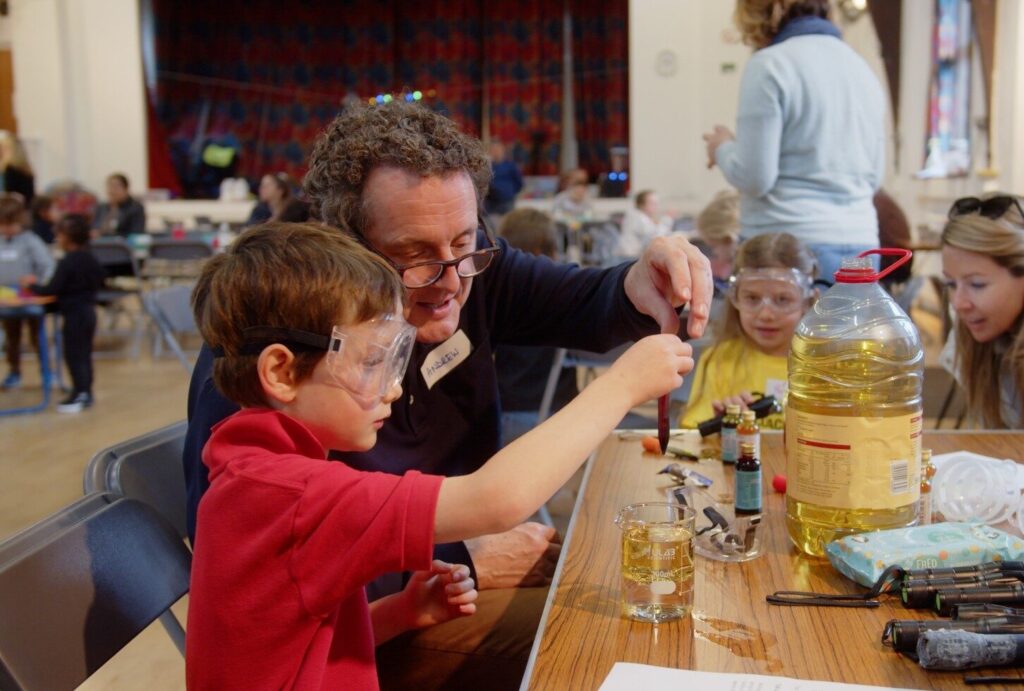
Messy Church is just such a ministry, we realise that our ministry goes beyond just the families that come along to our Messy events… who know who the children will speak to about what they got up to at Messy Church and how those stories can be a wonderful vehicle for God’s message of hope.
|
 Follow this link to hear them on the Mission Matters Podcast.


 Messy Church
Our Diocesan Vision is that the Kingdom of God is good news for all, and that fundamentally includes Children, Young People and Families. A key priority of our Parish Support Team strategy is to support and enable parishes to Grow Active Young Disciples. The Growing Younger team has been put together around this priority and a lot of our work is based around the national Church of England movement that is Growing Faith.
Growing Faith is the movement that exists to change the culture of the Church of England, so that everyone instinctively puts children, young people and families at the heart of all the ministry and mission of the Church.
Growing Faith involves churches, schools and households working together to help children, young people and families have life in all its fullness.
As a diocese we are adopting Growing Faith as the basis for our strategic plans to grow younger.


Jesus (Matt.19:14) and the early church (1. Tim 4:12) placed immense value on the place and role of children and young people in the kingdom of God.
Children, young people and families are vitally important to the church, not merely for our survival into future generations, but because a church that cares about children and young people is indicative of a healthy church.
In this report from the House of Bishops in 2019, there is recognition that ‘it is not always clear that the church is sufficiently focused on the engagement in ministry with children and young people.’
This is despite it being well acknowledged that the vast majority of Christians today have come to faith before the age of 18.
As a church and as a diocese, we have to confess that historically and at present children and young people have not always been intrinsically part of our ministry and mission.
There needs to be a cultural shift.
Growing Faith envisions children, young people and households coming to faith, growing in discipleship and contributing confidently to the Kingdom of God through the community of faith.
It is about how, as members of the whole people of God, children and young people are encouraged and how the whole Church is equipped to think intergenerationally. (A useful summary can be found here )
Growing Faith provides a helpful lens for assessing our current practices and potential opportunities.
As we, as churches and as a diocese, seek to give children, young people and families a chance to explore and deepen their faith, it is helpful to look for the meeting places between churches, schools and households.
Alongside our diocesan vision, "The Kingdom of God – good news for all" we are inviting church communities to ask themselves what it would look like to be good news for young people in churches, schools and households.
Three principles are shaping our approach to Growing Faith:
Connected Communities - looking for the meaningful connected community of faith in the intersection between church, school and households.
Spiritual Encounters - engaging in conversations about and expressing faith as people encounter God as individuals and together.
Imaginative Practices - searching for 'a new way of being church' and creating new thinking and new doing in relation to children, young people and households.


Strenthen your understanding of the many issues that impace children. The e-learning course is funded by both local authorities and FREE to complete for all.
Follow this link to get registerd and booked onto a webinar.

Delivered by Ridley Hall, free and fully funded by the Church of England, Catalyst is a dynamic training course which aims to equip and connect those who work with children and young people in the local church. It’s for anyone, whether you are experienced or new to working with children and young people.
Starting this October, you will gain new knowledge and skills, connect with others, and also have the option to complete an assignment and gain 20 credits at level 4 qualification if you would like to.
Find out more, and sign-up on their website here.


Full Street, Derby DE1 3DR
01332 388650
Email:


