


Mission
There are several grants aimed at making churches greener and helping them to lower emissions and become more efficient.
The first step is to get in touch with Gordon Sephton at
gordon.sephton@derby.anglican.org
Gordon will talk about what you want to do and help you to decide which grant would be the right one to go for.
A brief overview of the grants available:
Quick wins: Best for churches which have a relatively immediate opportunity to undertake small decarbonising projects in the range of £3k-£6k.
Give to Go Green: Medium scale projects with costs up to about £20k (though there is some flexibility here) in parishes wanting to grow their fundraising capabilities and confidence. This works well where churches have a good capacity for volunteers and PCC members to commit to a fundraising campaign. Funds raised are then matched, up to £10k, giving a total of £20k.
Decarbonising Churches Grant: Largest scale projects. Supports high emitting churches (over 10 tonnes pa) and those with failing heating systems to plan and deliver major carbon cutting projects. It focuses on improving energy efficiency and moving to electric heating, so that buildings feel warm, welcoming and are fit for the future.
These grants will have different rounds throughout the 2026-2028 period. More details are available here: Net Zero Carbon Programme Grants for Churches | The Church of England

St Marys is an ancient church, whose origins are entwined with the history of the Anglo-Saxon settlement which became Ilkeston The Church’s History – St Mary's Church, Ilkeston.
It is also a very large church, having been significantly extended over the years.
Like many old churches, heating was probably first added by the Victorians.
Parts of this system are still in use, with heat generated by a boiler which is over seventy years old!
This venerable system is not the most efficient. It is also expensive to run, costing up to £120 per day in the heating season, and whilst it succeeds in raising the temperature of the building by a few degrees, it struggles to make the building feel warm. On top of this, the church was emitting over ten tonnes of planet warming greenhouse gases every year, making it one of the highest emitters in the diocese.
This became evident when the churches Energy Footprint Tool (EFT) returns were studied. As a result the church became eligible for a free energy audit as part of the national Net Zero programme Reducing emissions from churches | The Church of England
This measured how much heat would need to be generated to keep the whole building warm. The answer was an awful lot! Which would result in bills to match.
There had to be a better way.
Fortunately, the report went on to suggest that a ‘heat the people’ approach might be the answer.
This would involve providing heat directly to the members of the congregation, and not the empty space around them.
After visiting a few churches with different technologies (an important step to get a feel for different solutions), the church decided that they wanted a pew-based heating system.
These use electrical heating either under the pew or in pew cushions.
Importantly, energy is only used to heat the seats which are occupied, tailoring the heating to the congregation.
Equally important, as the system is electrical, using a renewable supply means the heating does not contribute to climate change.
They chose heated pew cushions from Kovoschmidt ABOUT US - Church pew seats heating
With such a large church, over 200m of cushions were needed! The finished installation looks really smart, with wiring that is barely visible and tasteful blue seats throughout the nave and side chapels.
Midweek services with smaller numbers of congregants are often held in the side or Peter chapel.
I joined such a service on a cool day just before Christmas. As soon as I sat down I could feel the heat emanating from the seat, and the system worked well throughout the service.
The gas boiler is still in operation, but reduced to a supporting role- at a much reduced cost.
The price of running the pew heating in the side chapel is estimated at about £2 per service, which on the day I visited, worked out at about 10p per person!
St Marys are in the process of adding heaters (such as these Pew Heaters | Pew Heating For Churches | BN Thermic) underneath the pews in the Peter chapel as well. These will provide extra heating on the coldest days, and, if rolled out further, allow the gas boiler to be dispensed with altogether. Crucially, they will provide extra heat lower down, helping to keep peoples feet warm and provide a ‘blanket’ of warm air around each person.
St Marys is a great example of how a church can reduce its reliance on fossil fuels in stages, and reduce its running costs in the process!
If you would like to know more about how your church could do the same, please get in touch at netzero@derby.anglican.org
GYC26: Inspiration, Energy and a Shared Passion
We are so grateful to everyone who joined us at Growing Younger Church 2026. Your presence, openness, and passion for children and young people helped make it such a rich and encouraging day.
There was a real buzz as over 90 people gathered, each bringing their own experiences, questions, and hopes for what God might do in their churches. Together, you created a space full of energy, generosity, and shared purpose.
One of the greatest gifts of the day was the willingness of those in the room to pause, reflect, and engage so thoughtfully. As one delegate put it:
“A chance to reflect and hear how we can, in simple Christ-like love, encourage and enable ministry in young people.”
Others spoke about the value of coming as a team:
“Coming as a parish team and gathering fresh ideas.”
It was your contributions, conversations, and shared learning that shaped the day and made it what it was.
Together, we explored the realities facing Generation Alpha and shared practical ideas for nurturing young disciples, building a sense of belonging, and creating more inclusive communities. What stood out wasn’t just the content, but the way people engaged with it—ready to listen, to learn, and to take the next step.
We’re also hugely thankful to all our contributors, including Youthscape, The Peak Centre, Growing Hope, Hazelnut Community and others, who helped shape the day with insight, wisdom, and encouragement.

What’s Next?
GYC26 may be over, but the momentum you helped create continues.
Whether you were in the room or following from afar, you are part of this journey. If something has sparked an idea or a next step, we’d love to hear from you: GrowingYounger@derby.anglican.org
Because growing a younger church isn’t just a goal—it’s something we’re building together.
Have a little look at some highlights of the day on our social media on Instagram and Facebook.
Church Urban Fund is a national charity working with local leaders, churches and other faith groups all over England. Our local partners are committed to serving and strengthening the community where they live.
Click on their logo to go to their introduction page.
The breadth of funding streams potentially available for your project
Note: Many of these funders flow in and out of funding so it will be necessary to check directly to see if they are currently open to applications.
Youth Work Project
- National Lottery Funding – Flexible, supports salaries, equipment, and community-led youth projects.
- The Childs Charitable Trust– Supports Christian organisations sharing the gospel, including youth work.
- John James Charitable Trust – Supports Christian education and youth ministry.
- The Cinnamon Network – Offers micro-grants for churches starting youth-focused projects.
- Laing Family Trusts – Support Christian youth initiatives, including capital improvements.
- Joseph Rank Trust – Supports youth-focused Christian projects and church property improvements.
- Garfield Weston Foundation - Garfield Weston Foundation funding youth work.
Community Outreach Project
- National Lottery Funding– Strong fit for community-led outreach, especially in disadvantaged areas.
- Benefact Trust – Supports projects with community impact and Christian ethos.
- MB Reckitt Trust – Funds Christian social action and community cohesion.
- Sir Halley Stewart Trust – Supports innovative social projects that promote human flourishing.
- The Bishop Radford Trust – Supports Christian ministry with community impact.
Mental Health Support Project
- National Lottery Funding– Supports mental health initiatives, especially in underserved communities.
- Sir Halley Stewart Trust – Funds pioneering social and medical projects.
- Benefact Trust – Supports projects tackling social issues, including mental health.
- Joseph Rank Trust – May support if framed within practical and spiritual needs.
- MB Reckitt Trust – Supports Christian social thought and action, including mental health.
- The Bishop Radford Trust – Supports Christian ministry, including pastoral care.
Funders that May Support Equipment (with the right framing):
- Benefact Trust – Typically funds capital projects, so if the equipment is part of a building upgrade or a tangible, lasting asset, it may be eligible.
- Biffa Award– Focuses on building improvements, but may include fixtures and fittings (e.g. kitchen equipment, heating systems).
- National Lottery Funding– Very flexible and can fund equipment, especially if it supports community benefit.
- Joseph Rank Trust– May support equipment if it’s part of a broader Christian community or educational project.
- Laing Family Trusts– Could support equipment if it’s essential to a Christian youth or community initiative.
- The Cinnamon Network – Their £2,000 micro-grants could be used for small-scale equipment needs tied to a recommended project.
Possibly Suitable for Salaries or Staff Costs
- The Childs Charitable Trust – Supports Christian organisations sharing the gospel; may fund staff if aligned with mission.
- John James Charitable Trust – Supports individuals in ministry training and Christian education; may support youth workers if aligned.
- Benefact Trust - This is another funder that can support salaries for community-based projects.
Building Renovation Project
- Biffa Award – Excellent for community building renovations; must meet location criteria and provide 10% match funding.
- Benefact Trust – Funds capital projects with Christian ethos and community impact.
- Joseph Rank Trust – Supports church property improvements for community use.
- Laing Family Trusts – Fund capital improvements for Christian organisations.
- John James Charitable Trust – May support building improvements for Christian youth work.
Funders Likely to Offer 100% Funding
- National Lottery Funding flexible and equity-based; can fund full project costs including salaries, equipment, and delivery.
- The Childs Charitable Trust No mention of match funding; supports Christian organisations sharing the gospel.
- The Cinnamon Network offers fixed micro-grants (£2,000); no match funding required.
- John James Charitable Trust supports individuals and organisations; no match funding mentioned.
- Sir Halley Stewart Trust focuses on innovative projects; no match funding requirement stated.
- Slavanka Trust supports Christian ministry and education; no match funding mentioned.
- Saltley trust funds Christian learning and education; no match funding requirement noted.
- The Bishop Radford Trust supports Christian ministry; no indication of match funding needed.
- MB Reckitt Trust Funds Christian social thought and action; no match funding required.
Funders That Require or Prefer Match Funding
- · Biffa Award requires a 10% third-party contribution. This is a strict condition for eligibility.
- · Benefact Trust typically funds only a small percentage of the total project cost to support more causes. Match funding is expected.
- · Joseph Rank Trust While not explicitly stated, they often fund part of a project and expect applicants to have other sources of funding.
- · Laing Family Trusts may not fund 100% of a project; co-funding is often expected, especially for capital projects
Be encouraged by stories from parishes across Derbyshire and see how you can pray for children, young people, families, schools, and church communities across the Diocese of Derby.

You never know how far reaching your ministry can be… it is amazing how God uses what we do to reach way beyond our expectations.
Messy Church is just such a ministry, we realise that our ministry goes beyond just the families that come along to our Messy events… who know who the children will speak to about what they got up to at Messy Church and how those stories can be a wonderful vehicle for God’s message of hope.
|
If you have a story to share and encourage others, please get in touch at growingYounger@derby.anglican.org

Primary School Retreat Days & Training delivered by the Peak Centre
Learn how to facilitate retreat days for the local primary schools in your own context! Look out for this training in the new year, offered by the highly qualified team at the Peak Centre.
Book a primary school retreat day here and see the Peak Centre website for more information here.

Looking for material to use for your All Age worship?
Christian cartoons, worship songs, and free resources.
The award-winning Cheeky Pandas is one of a kind: a British-made Christian TV series for kids on YouTube. It is Bible-based, fun, free, friendly and full of music, for children and parents looking for faith-based content. There are also stacks of extra resources to serve parents, schools and churches. This is what you’ve been looking for! Click the Cheeky Panda logo to go the the website.
 Messy Church
It’s church, but not as you know it.
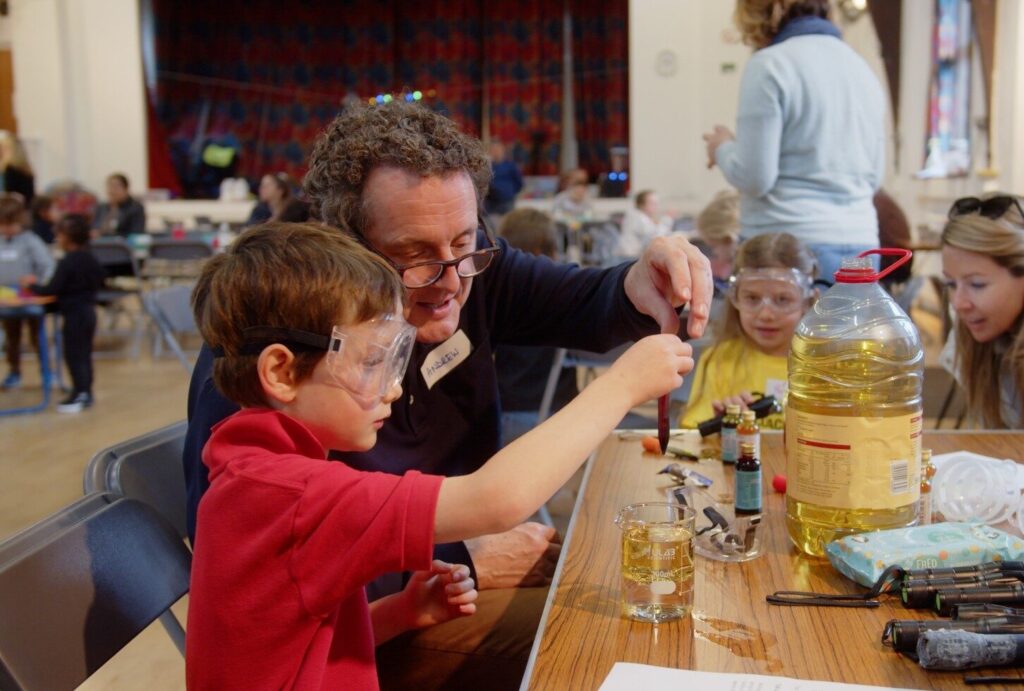
Messy Church is a way of being church for families and others. It is Christ-centred, for all ages, based on creativity, hospitality and celebration.
Follow this link to find out more and start your own journey to starting a Messy Church in your parish.
Learn The Lords Prayer with actions... perfect for a Messy Church session
Our Diocesan Vision is that the Kingdom of God is good news for all, and that fundamentally includes Children, Young People and Families. A key priority of our Parish Support Team strategy is to support and enable parishes to Grow Active Young Disciples. The Growing Younger team has been put together around this priority and a lot of our work is based around the national Church of England movement that is Growing Faith.
Growing Faith is the movement that exists to change the culture of the Church of England, so that everyone instinctively puts children, young people and families at the heart of all the ministry and mission of the Church.
Growing Faith involves churches, schools and households working together to help children, young people and families have life in all its fullness.
As a diocese we are adopting Growing Faith as the basis for our strategic plans to grow younger.

Click on the image to read the full booklet

Why is Growing Faith needed?
Jesus (Matt.19:14) and the early church (1. Tim 4:12) placed immense value on the place and role of children and young people in the kingdom of God.
Children, young people and families are vitally important to the church, not merely for our survival into future generations, but because a church that cares about children and young people is indicative of a healthy church.
In this report from the House of Bishops in 2019, there is recognition that ‘it is not always clear that the church is sufficiently focused on the engagement in ministry with children and young people.’
This is despite it being well acknowledged that the vast majority of Christians today have come to faith before the age of 18.
As a church and as a diocese, we have to confess that historically and at present children and young people have not always been intrinsically part of our ministry and mission.
There needs to be a cultural shift.
Growing Faith envisions children, young people and households coming to faith, growing in discipleship and contributing confidently to the Kingdom of God through the community of faith.
It is about how, as members of the whole people of God, children and young people are encouraged and how the whole Church is equipped to think intergenerationally. (A useful summary can be found here )
The Growing Faith Principles
Growing Faith provides a helpful lens for assessing our current practices and potential opportunities.
As we, as churches and as a diocese, seek to give children, young people and families a chance to explore and deepen their faith, it is helpful to look for the meeting places between churches, schools and households.
Alongside our diocesan vision, "The Kingdom of God – good news for all" we are inviting church communities to ask themselves what it would look like to be good news for young people in churches, schools and households.
Three principles are shaping our approach to Growing Faith:
Connected Communities - looking for the meaningful connected community of faith in the intersection between church, school and households.
Spiritual Encounters - engaging in conversations about and expressing faith as people encounter God as individuals and together.
Imaginative Practices - searching for 'a new way of being church' and creating new thinking and new doing in relation to children, young people and households.
FAQs
-
What is the current picture? +
Numbers are not always the best way to measure how fruitful a church/ministry is, but they can be a useful tool.
An estimated 95,800 under 16s attended Sunday church before the pandemic, with 1100 in the Diocese of Derby.
Most recent provisional national statistics for mission imply this has dropped by as much as 40% between 2019 and 2021.
Many of our churches are rebuilding their ministries and there is lots of potential across the diocese, but sadly children’s, youth and families ministries were most impacted by the pandemic.
However, the reality is that there are many opportunities to be good news to children, young people and families, especially since the needs for many have increased.
We are supporting and encouraging innovative children’s and youth ministries across the diocese. -
What about small congregations with fewer children? +
Growing Faith is a vision for all churches, large or small.
Every congregation can pray for their community and school(s).
Children, young people and their families need a friendly welcome and the chance to be involved, even if they are just visiting. -
How should we identify opportunities for Growing Faith? +
A key recommendation from the national growing faith movement, is that churches are encouraged to do ministry with and not just for children, young people, and families.
Listening to the voices of children and young people is key if a church is to serve them, but moreover young people are the church of now and we encourage all churches to experience the rich blessing that comes from involving young people as much as possible in all aspects of church life, including decision making structures. -
What is the Church of England doing nationally to develop Growing Faith? +
Details of the Growing Faith Foundation can be found online.
Lucy Moore (formerly of Messy Church) now heads up the team. The work in progress includes:
• Encouraging networking and shared story-telling across dioceses through growing faith champions.
• Learning hubs – investing in 12 learning hubs across the country to foster growing faith in different contexts. As a diocese, we have successfully applied for one of these learning hubs commencing in May 2023.
• Training programmes – developing the pathways for youth, children’s and family workers so that more can explore it as a vocation and progress in it for longer.
• Research - 13 Growing Faith research projects are underway to further our understanding of growing faith in the intersections between households, schools and churches. -
How will the church(es) I’m linked with be part of Growing Faith? +
It’s likely that there will already be areas of GF that are part of your church life.
Perhaps someone visits and helps in the local school, maybe you are engaging with young people in your community through various ministries, or have ways of involving children and young people in your Sunday worship, or perhaps there is a Toddler group or other activity to support carers and parents.
Growing Faith is about prayerfully seeking ways to further develop ministry in schools, homes and churches, so that as many children, young people and families have the opportunity to explore and grow their faith. -
How can we pray? +
Prayer underpins all our local, diocesan and national efforts to reach the younger generations with the good news of the Kingdom of God.
In line with the national bold outcome to double the number of young disciples in the church by 2030, there is a weekly national prayer meeting on zoom every Tuesday 1-1.20pm.
The aim is for 1000 people to pray weekly.
To get the login information visit The Church of England website. See More
- 1
Launchpad
We were delighted to celebrate with the second cohort of Launchpad training at GYC26. It was inspiring to hear the hopes and dreams of clergy from across the Diocese, each bringing their own perspective shaped by the unique context and tradition of their parish.
Together, they shared a deep commitment to the young people in their communities, and it was clear that God is at work in and through these churches. We look forward with excitement to seeing how these visions take shape and grow over the coming year.
Get a glimps of the celebration below.
Youthscape Essentials
We’re really excited that this early autumn we’ll be launching two (maybe even three!) Youthscape Essentials groups across the Diocese.
If you work with young people (or are thinking about starting), this is such a great chance to pick up some brilliant, practical tools and feel more confident in what you’re doing.
Youthscape Essentials is all about the basics done well — helping you understand young people better, build real relationships, and create spaces where they feel safe, welcome, and able to explore faith.
It’s also a great way to meet others doing similar things, swap ideas, and realise you’re not on your own!
If you care about young people and want to grow in this area, this is definitely for you — keep an eye out for more details coming soon.
Follow this link to watch a short video to explain the course.
Growing Younger: Leaders Network Gathering
Our first Growing Younger Leaders' Network Gathering brought together people from across the Diocese to connect, encourage one another and share honestly about the joys and challenges of helping children and young people grow in faith. Although we come from different church traditions and contexts, we share a common vision to see more young people finding belonging in our churches.
Together we created a safe space to listen, learn and be strengthened, leaving refreshed and reminded that we are not on this journey alone.

More Leaders Network Gatherings will be happening throughout the year so stay on the look out for our next one.

Delivered by Ridley Hall, free and fully funded by the Church of England, Catalyst is a dynamic training course which aims to equip and connect those who work with children and young people in the local church. It’s for anyone, whether you are experienced or new to working with children and young people.
Starting this October, you will gain new knowledge and skills, connect with others, and also have the option to complete an assignment and gain 20 credits at level 4 qualification if you would like to.
Find out more, and sign-up on their website here.
Free Safeguarding Training for all.

Strenthen your understanding of the many issues that impace children. The e-learning course is funded by both local authorities and FREE to complete for all.
Follow this link to get registerd and booked onto a webinar.
We have more training lined up for 2026 so watch this space!
- 1

After finishing university and moving back home, I wanted to gain experience working with children and young people whilst also accessing some further training, so Future Youth was perfect for me.
It also gave me the chance to experience a different type of church and create a new Christian family compared to my normal church that I have grown up in.
Although based at Derby Cathedral, I have been able to explore other youth ministries within the deanery.
I would not have been able to do this scheme if it had not been paid.
Due to travel expenses and the climbing increase of living costs, it would not have been viable for me to start, never mind complete.
It has given me the life experience of working a full-time job and helped me become more independent.
The highlight of my year has been the increase of children attending Sunday morning service and that of messy cathedral.
Bringing part of who I am to the role has been great, including my agricultural background as I brought a lamb to the Easter Messy Cathedral.
Asking colleagues at the Cathedral, they have all commented on how my input has led to an increase Messy Cathedral attendance and sustainability as well as the Sunday school.
I am proud that being a part of this scheme at the cathedral has led to an increase in youth connection and outreach.

How green are we?
How is your parish doing in its quest to become carbon net zero by 2030?
How is the Diocese of Derby doing as a whole?
To know the answers, we need facts and figures.
We track those details using the Energy Footprint Tool that is available to all parishes.
>>
>>
How green are we?
The Energy Footprint Tool, available to all parishes provides the facts and figures.
This easy-to-use tool will tell your church what your carbon footprint is annually, based on the energy you use to heat and light your buildings. The tool is provided for free!
It is a great feeling to know that you are making a difference and reassuring you that you are on the right Practical Pathway to Net Zero 2030.
All over the diocese, PCCs are moving to green-energy suppliers, others are moving away from fossil-fuel heating systems, some are moving towards more energy-efficient lighting, and all are considering how they can reduce their energy consumption.
Reducing consumption has the obvious benefit of reducing bills. But knowing your carbon footprint may support applications for funding to help you on your Net Zero journey. Reduced energy consumption means you really are caring for God's creation, helping to sustain a greener environment to live and work in, etc.
You are helping the diocese to fulfil elements of its vision – becoming greener, and ultimately challenging climate injustice by reducing inequalities, making the world a better and fairer place. Good news for all!
We should be immensely proud of our continuing efforts to reduce our carbon footprints and being able to demonstrate it with the hard evidence you can get from the Energy Footprint Tool.
The tool makes use of data that the CofE already holds about your church buildings, and that means it needs very little additional input from you.
It was designed to be simple. If you need assistance we are here to help, so get in touch.
All you need is to have your 2024 electricity and gas/oil bills to hand and input the figures to the Energy Footprint Tool by Monday, 30 June 2025.
This will make a huge difference to your church, the diocese, and the CofE.
For further help with the Energy Footprint Tool, contact the Net Zero Carbon Team
Will Rolls
Net Zereo Carbon Program and Project Manager


